


Article: How to Read a Clothing Care Label: A Guide to Textile Care Symbols
How to Read a Clothing Care Label: A Guide to Textile Care Symbols
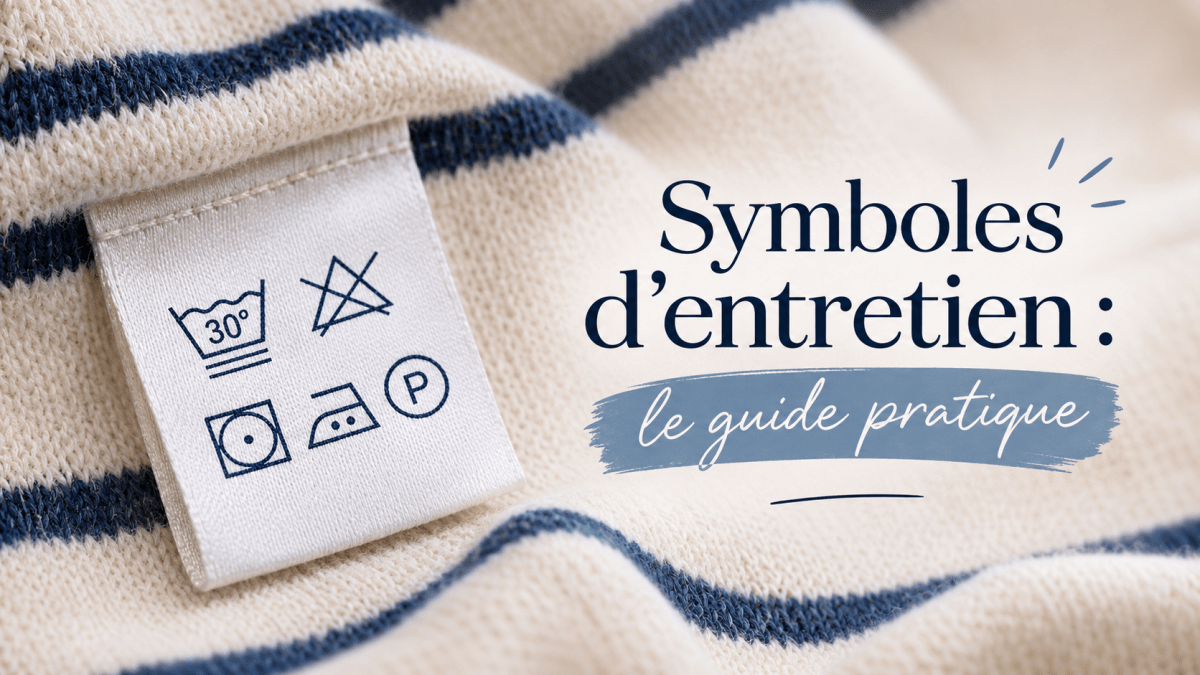
A number inside a wash tub, a crossed-out triangle, an iron with dots... The symbols found on clothing care labels are not always easy to understand. Yet they provide essential information for choosing the right washing programme, drying method and ironing temperature.
Taking the time to read a care label helps avoid mistakes that could affect a garment’s colour, shape or appearance.
At Mat de Misaine, we pay particular attention to the care instructions for our clothing. To help you understand them, here is a practical guide to the main textile care symbols and their meanings.
Why Is It Important to Read a Clothing Care Label?
Every garment has its own characteristics. Its composition, dyeing, finishes and accessories can all influence how it should be cared for.
Two garments made from the same fabric do not necessarily require the same precautions.
The care label indicates which treatments a garment can withstand, particularly in terms of washing, bleaching, drying, ironing and professional cleaning.
One essential point: the temperatures and treatments indicated represent the maximum permitted limits, not recommendations that must always be followed.
For example, if washing at 30°C is permitted, this does not mean the garment must always be washed at that temperature. A gentler treatment may be suitable.
It is therefore advisable to check the label before washing a garment for the first time and follow any additional instructions.
What Are the Five Main Textile Care Symbols?
Care symbols are divided into five main categories, generally displayed in a specific order.
|
Symbol to recognise |
Meaning |
|---|---|
|
Wash tub filled with water |
Washing |
|
Triangle |
Bleaching |
|
Square |
Drying |
|
Iron |
Ironing |
|
Circle |
Professional cleaning |
These symbols may be accompanied by numbers, dots, lines or a cross.
These additional markings specify the temperature, intensity of the treatment or whether a particular process is prohibited.
Washing Symbols: Understanding Temperatures and Programmes
The washing symbol takes the form of a wash tub filled with water.
It indicates whether a garment can be washed by hand or in a washing machine and specifies any restrictions.
What Do the Numbers 30, 40 or 60 Inside the Wash Tub Mean?
The number inside the wash tub indicates the maximum permitted washing temperature, expressed in degrees Celsius.
-
30°C: washing permitted at a maximum temperature of 30°C.
-
40°C: washing permitted at a maximum temperature of 40°C.
-
60°C: washing permitted at a maximum temperature of 60°C.
These temperatures are limits that must not be exceeded.
The choice of washing programme also depends on the other instructions shown on the label.
What Does a Line Under the Washing Symbol Mean?
A horizontal line beneath the wash tub indicates that a mild washing process is required.
You should therefore select a suitable programme with reduced mechanical action.
Two lines beneath the wash tub indicate a very mild process, intended for garments requiring extra care.
Respecting the temperature alone is not enough: the washing programme is equally important.
How Can You Recognise the Hand-Washing Symbol?
A hand inside the wash tub indicates that the garment should be washed by hand.
This symbol should not be confused with machine washing at a low temperature.
For garments displaying this symbol, any additional instructions, particularly the maximum temperature, must also be followed.
What Does a Crossed-Out Wash Tub Mean?
A wash tub crossed out with an X means that domestic washing is prohibited.
The garment must therefore not be washed by hand or in a washing machine.
You should check the other symbols to identify which care treatments are permitted.
Bleaching Symbols: Understanding the Triangle
The triangle relates to bleaching treatments.
It indicates whether a garment can be treated with bleaching agents.
What Does an Empty Triangle Mean?
An empty triangle indicates that bleaching is permitted, including both chlorine-based and oxygen-based treatments.
This does not mean that bleaching is necessary every time the garment is washed.
What Does a Triangle with Two Diagonal Lines Mean?
A triangle containing two diagonal lines indicates that only oxygen-based bleaching is permitted.
Chlorine bleaching is prohibited.
What Does a Crossed-Out Triangle Mean?
A triangle crossed out with an X means that bleaching is prohibited.
You should therefore avoid bleaching products or processes, whether chlorine-based or oxygen-based.
Drying Symbols: Tumble Drying or Natural Drying?
Drying is represented by a square.
Depending on the markings inside it, this symbol indicates whether tumble drying is permitted or whether a natural drying method should be used.
How Can You Recognise the Tumble-Drying Symbol?
Tumble drying is represented by a circle inside a square.
Dots may indicate the permitted drying temperature.
-
One dot: tumble drying at a reduced temperature.
-
Two dots: tumble drying at a normal temperature.
The corresponding setting must be selected on the appliance.
What Does a Crossed-Out Tumble-Drying Symbol Mean?
A square containing a circle crossed out with an X means that tumble drying is prohibited.
You should instead use a drying method permitted by the care label.
How Can You Recognise the Flat-Drying Symbol?
Flat drying is represented by a horizontal line inside a square.
This indicates that the garment should be laid flat while drying.
This method can help limit distortion in certain knitted garments.
What Does the Line-Drying Symbol Mean?
A vertical line inside a square indicates line drying.
Other variations exist, including symbols for drip drying.
How Can You Recognise the Shade-Drying Symbol?
A diagonal line in the upper corner of the square indicates that the garment should be dried in the shade.
This marking may accompany instructions for flat drying or line drying.
Ironing Symbols: Understanding the Dots on the Iron
Ironing is represented by an iron symbol.
The dots inside indicate the maximum temperature of the iron’s soleplate.
What Does an Iron with One Dot Mean?
One dot indicates ironing at a low temperature.
Under the current standard, the maximum soleplate temperature is 120°C, without steam.
What Does an Iron with Two Dots Mean?
Two dots indicate ironing at a medium temperature, with a maximum soleplate temperature of 160°C.
What Does an Iron with Three Dots Mean?
Three dots indicate ironing at a high temperature, with a maximum soleplate temperature of 210°C.
What Does a Crossed-Out Iron Mean?
An iron crossed out with an X indicates that ironing is prohibited.
This instruction must be followed, even if the garment is creased after washing.
Important: ironing temperatures and conditions must be interpreted according to the standard applicable to the care label. Any additional manufacturer instructions must also be followed.
Professional Cleaning Symbols: Understanding the Circles
The circle indicates the permitted professional cleaning methods.
These symbols are primarily intended for textile care professionals.
What Do the Letters P and F Inside a Circle Mean?
The letters inside a circle specify the permitted professional dry-cleaning processes.
-
P: professional dry cleaning using certain permitted solvents.
-
F: professional dry cleaning using hydrocarbon solvents, under specified conditions.
These letters do not refer to domestic washing machine programmes.
What Does a Circle Containing the Letter W Mean?
The letter W indicates that professional wet cleaning is permitted.
This is a specialist process carried out by a professional and should not be confused with ordinary washing in a domestic washing machine.
What Does a Line Under the Circle Mean?
A line beneath a circle indicates that a mild professional cleaning process is required.
Two lines indicate an even gentler treatment.
What Does a Crossed-Out Circle Mean?
A crossed-out circle indicates that professional dry cleaning is prohibited.
This must be distinguished from the prohibition of professional wet cleaning, represented by a crossed-out circle containing the letter W.
How to Interpret a Complete Clothing Care Label
To read a care label, start by identifying the five categories of symbols.
Let us take a fictional example of care instructions:
-
Machine wash at a maximum temperature of 30°C, using a mild cycle.
-
Do not bleach.
-
Do not tumble dry.
-
Iron at a low temperature.
-
Professional dry cleaning permitted using a specified process.
In this case, simply selecting a washing temperature of 30°C is not enough.
You must also choose a mild washing programme, avoid tumble drying and follow the ironing instructions.
Each symbol provides additional information.
Common Mistakes to Avoid When Caring for Clothes
Relying Solely on Fabric Composition
A garment made from cotton, wool or viscose should not be cared for based solely on the name of its fabric.
Its construction, finishes or dyeing may require specific precautions.
The garment’s care label should therefore remain your main reference.
Confusing Maximum Temperature with Recommended Temperature
If washing at 40°C is permitted, this does not mean that this temperature must always be selected.
When suitable for the garment and its level of soiling, a gentler treatment may be used.
Ignoring the Lines Beneath Care Symbols
The lines beneath the wash tub or circle are important.
They indicate that the intensity of the treatment must be reduced.
Confusing Professional Wet Cleaning with Domestic Washing
A garment that can undergo professional wet cleaning is not necessarily suitable for washing in a domestic machine.
These processes involve different conditions.
Overlooking Drying Instructions
Even when a garment has been washed correctly, it can still be damaged if the drying method does not comply with its care label.
It is therefore important to check the drying instructions before using a tumble dryer or hanging a garment to dry.
Caring for Clothes According to Their Fabric
Understanding care symbols is an important first step. Certain fabrics also require particular attention.
Cotton, linen, wool, cashmere, viscose, velvet and denim all have different characteristics that can influence how they should be cared for.
For more detailed guidance, explore our fabric care guide.
You can also discover our specific advice on how to wash and care for linen clothing and how to care for wool jumpers and cardigans.
Understanding Care Labels to Look After Your Clothes
Care symbols provide valuable guidance for adopting the right garment care habits.
Washing, bleaching, drying, ironing and professional cleaning: each instruction helps identify the treatments suitable for a garment.
By making a habit of checking this information, it becomes easier to avoid mistakes and preserve the appearance of your clothes over time.
At Mat de Misaine, we encourage you to follow the care instructions specific to each garment and explore our care advice to look after your wardrobe throughout the seasons.
FAQ: Understanding Clothing Care Symbols
What Does the 30°C Symbol Mean on a Care Label?
It indicates that the maximum permitted washing temperature is 30°C. Any lines beneath the wash tub specify the type of washing programme required.
What Does a Cross on a Care Symbol Mean?
A cross indicates that the treatment represented by the symbol is prohibited. This may apply to washing, bleaching, drying, ironing or professional cleaning.
How Can You Tell Whether a Garment Can Be Tumble Dried?
Look for the square containing a circle. If it is crossed out, tumble drying is prohibited. If tumble drying is permitted, any dots indicate the temperature setting.
What Does the P Symbol Mean on a Care Label?
The letter P inside a circle indicates a professional dry-cleaning process using permitted solvents. This symbol is primarily intended for textile care professionals.
Can You Wash a Garment at a Lower Temperature Than the One Indicated?
Yes. Washing at a temperature below the indicated maximum is generally possible, provided the other care instructions are followed and a suitable treatment is selected.
What Is the Difference Between Hand Washing and Professional Wet Cleaning?
Hand washing is a domestic care method. Professional wet cleaning is a specialised process carried out using appropriate equipment and controlled settings.